
Essays
Latest Reviews
Featured Interview
Newest Essay
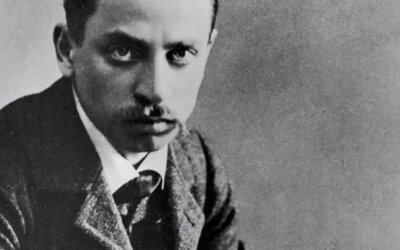
Preface: Wild Rose Bush
By Wally Swist
“Almost no translation of “Lullaby” has disappointed me, but I have never found those translations adequate or fully accommodating of the rhythms, images, and lyrics that I felt, saw, and heard in the poetry.”

Personal Things: A Countertheme Sequence from Rilke’s Neue Gedichte 1907
By Art Beck
“Some months ago, a friend sent me a translation of a Rilke poem titled “Todes-Erfahrung,” he found in a British journal. I wasn’t familiar with the poem, and it piqued my interest enough to try my own version.”

In the Name: The Power to Be Moved
By Robert Stewart
“Who is this him? If there were an actual him, the poem would do him a disservice.”

Untranslatable Song: The Vertical Poetry of Roberto Juarroz
By Wally Swist
“For a poet who is also considered to be an aphorist, and who was a friend and colleague of Antonio Porchia, a master of the form, the poetry of Juarroz is more substantive than what is an oversimplification of his style and form.”

Best of Impossible Worlds: Miriam Sagan’s and Tom Laichas’ Poetry of Place
By Toti O’Brien
I have acquainted Miriam Sagan and Tom Laichas through individual poems found in journals and magazines—chance encounters that have urged me to look for more.

How to Tell a True Origin Story of a Novel
By Nina Schuyler
“My novel is about a female mathematician, Virginia, who uses artificial intelligence to bring back her dead lover. The two anecdotes I just told you might seem like the origin story of my novel. If someone tells you an origin story like this, don’t believe it.”

Hidden Mischief: Some Thoughts on Tate and Edson
By Robin Arble
“The mischief in Tate and Edson’s poems plays with form as much as content. Already bored with the subversion inherent in the ‘the prose poem’—an oxymoron, a floating stone—their poems straddle the line between verse and prose.”

Notes on a Poem: Nathan McClain’s Labor Day: Brighton Beach
By Robin Arble
“Nathan is skeptical of the prose poem because he thinks, like many, but not all poets, that the line break is a fundamental element of successful poetry, and any poem that abandons the line break must replace it with something that succeeds in doing everything the line break does.”
Carta desde Montreal/Letter from Montreal
By Francisco García González, English translation by Mary G. Berg
Amigos, disculpen, pero escribir es menos original que lo que uno se imagina. Solo se trata de un acto de registro que unos hacen mejores que otros. Debe ser el talento. Tarde más de treinta años para darme cuenta que todos poseemos una mente literaria y que dicha cosa no para de generar narrativa. Eso es biología. Fascinante, además.