
Essays
Latest Reviews
Featured Interview
Newest Essay

Listening to Rilke Redux
By Wally Swist
“In Rilke’s praises, we find our own praise—of ourselves, of others, of mostly anything, actually. When anyone experiences an epiphany, that person wants to share that epiphany.”
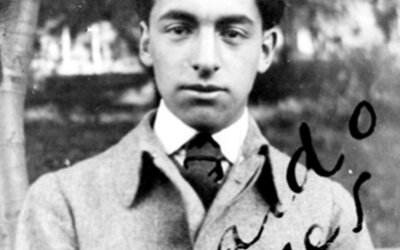
On Translating Neruda
By Wally Swist
“To realize what is right in front of us all the time, and for us not to fully appreciate it, is just part of the gift of the legacy of Neruda’s odes, and among their nourishment we discover the astonishment of the awareness of living.”
Preface: Wild Rose Bush
By Wally Swist
“Almost no translation of “Lullaby” has disappointed me, but I have never found those translations adequate or fully accommodating of the rhythms, images, and lyrics that I felt, saw, and heard in the poetry.”

Personal Things: A Countertheme Sequence from Rilke’s Neue Gedichte 1907
By Art Beck
“Some months ago, a friend sent me a translation of a Rilke poem titled “Todes-Erfahrung,” he found in a British journal. I wasn’t familiar with the poem, and it piqued my interest enough to try my own version.”

In the Name: The Power to Be Moved
By Robert Stewart
“Who is this him? If there were an actual him, the poem would do him a disservice.”

Untranslatable Song: The Vertical Poetry of Roberto Juarroz
By Wally Swist
“For a poet who is also considered to be an aphorist, and who was a friend and colleague of Antonio Porchia, a master of the form, the poetry of Juarroz is more substantive than what is an oversimplification of his style and form.”

Best of Impossible Worlds: Miriam Sagan’s and Tom Laichas’ Poetry of Place
By Toti O’Brien
I have acquainted Miriam Sagan and Tom Laichas through individual poems found in journals and magazines—chance encounters that have urged me to look for more.

How to Tell a True Origin Story of a Novel
By Nina Schuyler
“My novel is about a female mathematician, Virginia, who uses artificial intelligence to bring back her dead lover. The two anecdotes I just told you might seem like the origin story of my novel. If someone tells you an origin story like this, don’t believe it.”
Letter from Singapore
By Ho Lin
In Asia, most cities jolt to life at night, and Singapore is no exception. For one thing, it’s usually too damn hot to do anything during the day, except hit one of the public pools (until the inevitable afternoon thunderstorm hits).
A Hieronymus Litany: An essay on St. Jerome’s Epistles
By Art Beck
I. For the Love of God, Jerome?
Somewhere on the internet—I’m ashamed to say I’ve forgotten where or whose poem it was—I came across a poem that began with a Latin epigraph: Amor ordinem nescit.
On Light Noise as Translation
By Karen An-hwei Lee
Several years ago, a friend gave me a gift subscription to a magazine that sent, in turn, a sequence of maps—a bird migration map, a global warming map, a seas-of-the-world map, a night-sky atlas, and a map of the globe at night.
Preface to S O S: Poems, 1961-2013 by Amiri Baraka
By Paul Vangelisti
S O S traces the almost sixty-year career of a writer who may be, along with Ezra Pound, one of the most important and least understood American poets of the past century. The selection attests to a life’s work that is both a body a poetry and a body of knowledge; passionate, often self-critical reflections on the culture and politics of his time.
Letter from Paris
By Katy Masuga
Salut au monde! As expected this time of year and this time of evening and this place in the world, the sky is an incredible ivory blue and, yes, the clouds themselves are a luminescent pink strung across the vast yet controlled open space, encapsulated on the edges by centuries- and even millennia-old neighborhoods, like cotton candy pulled between sticky fingers or even just stretched cotton itself, in the way that it floats whimsically atop fields drifting with the breeze falling and rising and leaving parts of its body behind, spreading itself interminably among the numerous dark, dry stems and burnt, crackling leaves.
Letter from Hong Kong
By Lucas Klein
Reviewing exiled Chinese poet Bei Dao’s first full-length collection The August Sleepwalker in English in 1990, a professor quipped, “These could just as easily be translations from a Slovak or an Estonian or a Philippine poet. It could even be a kind of American poetry….”