Review
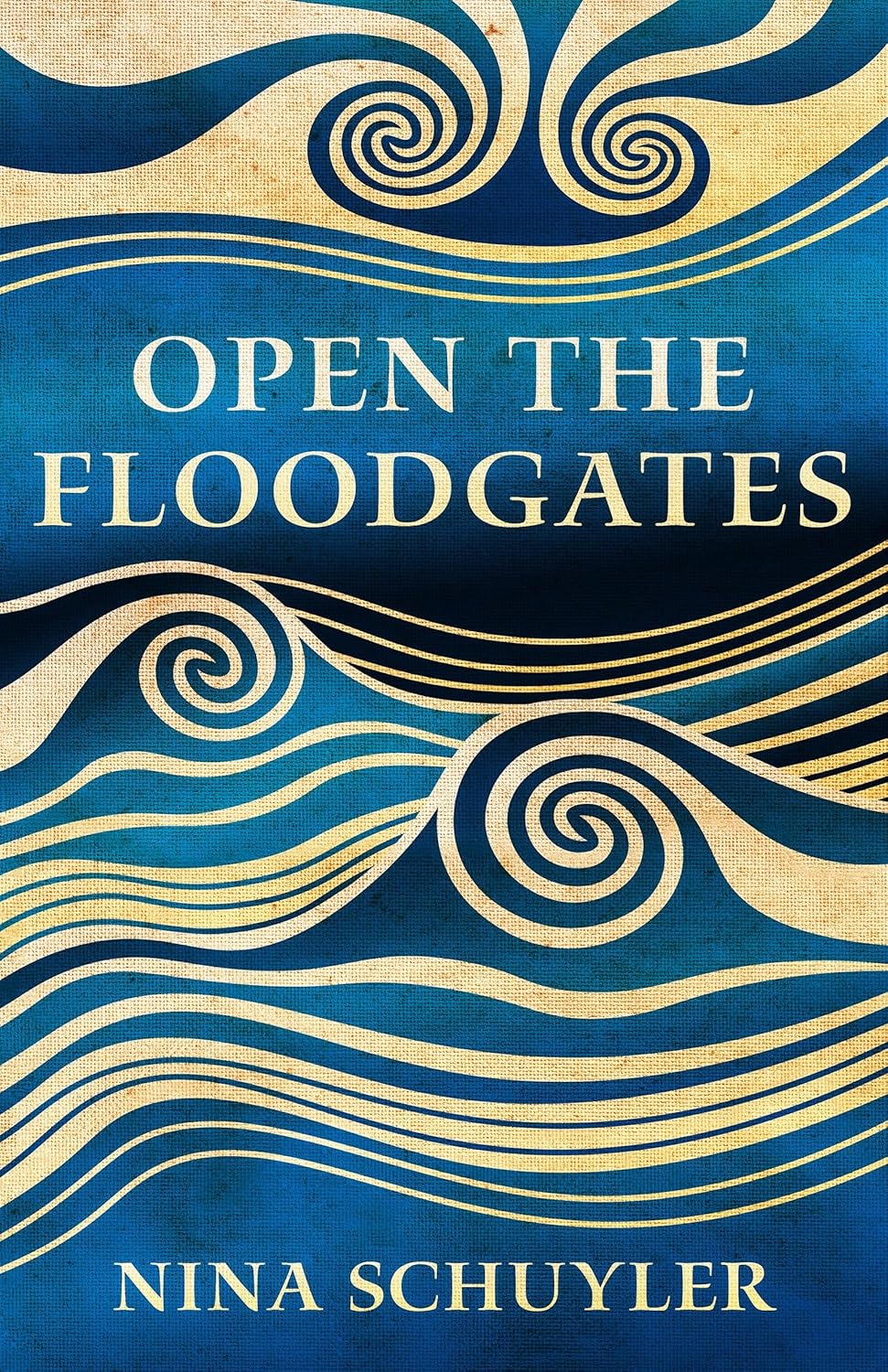
Open the Floodgates by Nina Schuyler
Review by Kelsey Squire
Reverberations Books
ISBN: 9781634051040
In his 1949 essay “Thinking Like a Mountain,” conservationist Aldo Leopold reflected on the environmental changes he witnessed across the United States as wolves, once a keystone predator in many ecosystems, were removed by overhunting and human encroachment. “We all strive for safety, prosperity, comfort, long life, and dullness,” Leopold mused, thinking of the commonalities between deer, ranchers, and the average American voter, each of which pursue “peace in [their] time.” Leopold cautioned that this pursuit of safety, however, might lead to danger over time; the absence of wolves leads to an unchecked population of deer, deforestation, and an overall destabilization of the environment over time.
While Leopold’s ecological principles have certainly been refined by ecologists in the decades since, his provocative essay title, “Thinking Like a Mountain,” continues to resonate with many today. What might it mean to think like a mountain? Like a prairie? Like a forest?
What about like a river?
Nina Schuyler’s new novel, Open the Floodgates centers around the challenge of what it might mean to think like a river. Inspired by recent court cases in New Zealand, Ecuador, and India that affirmed personhood rights for bodies of water, Open the Floodgates imaginatively explores the implications of these cases, particularly in a contemporary world that is defined by climate change and environmental disasters. Original, compelling, and lyrical, Open the Floodgates provides the perfect balance between confronting the horrors of human-led environmental change and hope for the tides to change with community action.
One of the most compelling aspects of the novel is Schuyler’s depiction of the River. Anthropomorphizing—giving a voice and a perspective to a non-human entity—can be particularly challenging for writers. Our shared languages as humans come from deep roots and define our very culture. Rendering the thoughts of a non-human entity in human language risks elevating human thinking over the non-human. What does it mean to think like a river? What forms the river’s language, its culture? The answers to these questions may prove to be elusive, but in Open the Floodgates, Schuyler draws on a host of literary and textual techniques to imagine the possibilities of non-human language and consciousness. The River’s voice is filled with movement—which is reinforced by Schuyler’s decision to present the River’s thoughts and words visually on the page, in waves. Other textual and literary devices add unique textures, such as presenting The River’s voice as a literal stream of consciousness. Schuyler elides spaces between words, like “littledownhill,” and uses parentheses to set off the River’s subconscious running thoughts: (whew) (wait) (ah). Throughout the novel, there is a reciprocal relationship between the River’s thoughts and emotions, as the River quivers with nervous energy in unfamiliar situations, unleashes torrents of anger when confronted with injustice, and retreats to placid places of comfort and safety. These textual choices render the River as both relatable but also not-quite-human in a way that attempts to center and respect the River’s personhood.
Much of the novel takes place in human halls of justice—a courtroom, a prison—unfolding like an alternative reality version of Law and Order. The case is The River vs The Town of Mellen. Does the River have a right to exist, to dictate the course of its own life? Presiding over the trial is Judge Larry Skolnick: a 42-year-old married father of two, graduate of Yale Law School, recent stroke survivor, who is energized by handling a landmark case and, internally, rooting for the River to win. The case, as Judge Skolnick sees it, “brings fear, excitement, anger, and this is absolutely new—a new way of constructing the world, turning it on its head and shaking it, rearranging it” (13-14). The defense is represented by Gary Dodge, hired by the Z Corporation, the largest employer in town, to protect their economic interests. The River represents itself and calls on a cast of characters to serve as witnesses for their cause: George, an exuberant 9-year-old; Hazel, a retired school teacher who now owns the local hair salon; and Ed, who draws on his PhD in literature and his Native American roots to advocate for the River as an elder who deserves to be respected.
Much like a river, the course of the novel ebbs and flows between different perspectives among the people of Mellen. The overall premise of the novel may lend itself towards a simple fable, with the good guys and the bad guys delineated clearly in black and white. But as the novel takes its course, readers will discover more complex characterizations. They may find themselves rooting for Judge Skolnick’s interest in seeing the River succeed … but find themselves annoyed at his lack of regard for his wife’s (legitimate) concerns about his health. Gary Dodge makes for a perfect villain, aligning himself with the capitalistic forces of the Z Corporation and defying water bans to fill his personal pool … but he also cares deeply for his children and his adorably-named dogs, Ham and Bone. Willard, the town crank, gets on everyone’s nerves, even his wife and their cat … but readers will see the private, vulnerable side of a man who is ashamed to collect seashells and is haunted by dreams in which he takes the form of a seahorse. Schuyler’s rendering of the townsfolk provides both complexity and at times, a bit of comedy, but ultimately, these portraits highlight our interconnected lives as community members living in a particular place.
One of the novel’s repeated motifs are brief “letters” from the River to Florence, the town’s resident Philosophy professor, about how to define what it means to be a person. A stable, concrete definition eludes the River and the townsfolk of Mellon more broadly. In attempting to think like a river, readers may quickly find that their initial ideas about how to define a person are too limiting: how can a single definition capture the diversity of human experience, as well as include those non-human rivers and corporations that the law has also designated as people too? Ultimately, Open the Floodgates explores how it is in navigating these thorny questions, in coming together as a community to see how we can meet our collective needs, is one way of defining what it means to be a person.
About the Author
Kelsey Squire teaches writing and American literature at Ohio Dominican University in Columbus, OH, and is a co-editor at The Willa Cather Review.