
Issue 33 | Fall 2025
Cate’s Upstate or Fashion After the Apocalypse
Welcome to Cate’s Upstate, a fashion forward boutique located in downtown Toddsville. The term “downtown” is used lightly, of course—Toddsville is a one-stoplight village with one thousand nine hundred and fifty-two residents as of last Tuesday. But in the summer months, the population swells with urban and suburban evacuees from the tri-state heat dome, seeking not only relief from the torrid temps of the greater metro area but also the many recreational opportunities of northern New York. Canoeing and kayaking, or for the more speedily inclined, motor boating and jet skiing (all equipment coated with fluorinated silicone and guaranteed zebra mussel-free by Upstate Boat Rentals, in accordance with state recommendations). Trail running, hiking, biking, birdwatching, berry-picking, stargazing, and hammock-lazing. Winery, brewery, and distillery touring and tastings (we recommend Upstate Apple Vodka, locally crafted from fruit picked every autumn in Upstate Orchards by seasonal laborers who once owned farms in the highlands of Guatemala). Farm to table dining, which while a table can be anywhere—in Chelsea or Brooklyn or Hoboken—really isn’t the same without a farm in sight (as opposed to a table on the cedar deck of Upstate Eats, which affords not only a view of the collapsed barn of Karl Witherspoon, who two years ago sold all his dairy cattle and drove off in a camper van to Florida, but also, when the wind allows, whiffs of cow shit from Wagyu Ranch just over the hill, where Karl’s remaining cows now graze on grass supplemented with troughs of grain to insure the signature high marbling). Concerts, theater, and art exhibits, where admittedly the work skews more towards crafts, though who is to say that Susan Smiley’s soapstone soap dishes carved to look like water lilies are not each in themselves a work of sculptural art (as well as a tribute to this dwindling species of aquatic flora in the shallows of our beloved lake)? And finally there is shopping, a form of recreation more readily associated these days with less rural regions where air conditioned malls and retail districts abound or more and more, with the rise of e-commerce, online stores “in” which customers can even virtually “try on the clothes” (a service that Cate learned to provide in her early years in the fashion industry, at H & M and Banana Republic), but arguably has been pursued for eons. Especially if you think of shopping as a sensory experience and process of selection rather than as a bald transaction. Consider Cro-Magnon eyes sweeping the bilberry bushes for the deepest of blues, the shade where indigo kisses perse, consider Cro-Magnon fingers rolling the little balls of fruit between rough pads, gauging for plumpness before plucking. Consider Cro-Magnon teeth chewing a bit of cattail root to discern its tenderness, in anticipation of a fuller rhizomatic repast.
Shopping at Cate’s Upstate is a return to the cattail roots, so to speak, of shopping: to the sensual pleasure of touching, feeling, and hearing the goods—the slipperiness of silk and polyester, the airy prickle of linen, the crisp whisper of polished cotton. And while back in the days of her virtual merchandizing career Cate loved to show customers how clothing would look on them without them trying it on, as well as new ways of wearing the pieces, since her return to Toddsville to be with her partner and soulmate, Billy (of Billy’s Upstate Building and Restoration), she realizes that there is no substitute for the chance not just to touch but to actually inhabit the clothes prior to purchase.
So come on in, try on anything you like, as many times as you’d like, though the secretions of your body will accumulate in the warp and weft of the fabric, leaving a scum of oil and skin cells (not to mention those nasty deodorant streaks) that only detergent will remove (and never fully), while the thrusting of your arms through the armholes and legs through the leg holes not to mention the bulgings of your torso will strain and fray the seams. It’s fine because you’ll buy something eventually, and in the meantime, whatever you don’t buy will find new commercial life on the sale rack. Or, if no one buys it there, then charitable renewal in the bin behind the Presbyterian church, where it will be repurposed as attire for the indigent on the outskirts of town and beyond, at missionary outposts in Rwanda and the like. Or, if the grime is too deep, the rending beyond repair, incineration at the dump.
Welcome back to Cate’s Upstate in Toddsville, New York. The two of you, following the recent Covid-related death of your respective mother and mother-in-law and subsequent inheritance of her early nineteenth-century brook-side Greek Revival home just a mile beyond village limits, have decided to live in Toddsville year round since there is no point in paying rent down in the city when everyone is working from home—enlarging the population of Toddsville to one thousand nine hundred and fifty four. You both have extensive summer wardrobes (thanks to Cate’s Upstate) stashed in the guest bedroom closets (including clothes for the Country Club where your respective mother and mother-in-law maintained a full family membership, with lake, tennis, and golf privileges [not to mention the great old bar, well-stocked with spirits, including a wonderful botanical gin from the Upstate Beverage Exchange], which you are debating whether or not to continue because you’re not Country Club types). But you have no suitable clothing for the remaining three seasons of the year in this less temperate climate.
No worries—we’ve got you covered. We even sell genuine Carhartts, pre-broken in by the fully insured and benefited crew (including always-calling-in-sick Keith) of Billy’s Upstate Building and Restoration, who wear the double yarn cotton duck overalls and work pants until through the micro-abrasions of rubbing up against wood siding and whatnot, as well as repeated washings, the fabric acquires an almost-brushed look and even softer feel, and further, makes no swooshing sound when the pant legs rub together. Which is what you want when you walk into Upstate Hardware and Home Improvement, no swooshing so as not to draw all those seamed and canny faces (even the twenty-year-old paint aisle assistant’s face is seamed and canny) to you and your attempt at a local yokel stroll past the counter down the aisle where you’re pretty sure the axes are. Because you are not an eighteenth-century French Empress seeking to announce her coquettish presence through the “scroop” (a portmanteau textile term combining “scrape” and “whoop”) of her silk taffeta gown and the soft tinkling of her bracelets. On the contrary, all too aware of the popular discontent that led to the Empress’s downfall, a discontent which centuries after both the French and American Revolutions continues to simmer in the economically depressed and under-government-funded rural regions of this country, you try to keep a low profile.
We have got you covered for work (as you will discover that your new-old loose-fitting, non-binding, sweater-accommodating Carhartt overalls are perfect not just for outdoor chores but also for sitting in a drafty, under-heated room in front of the computer all day). And now that the Country Club and its great old bar are closed for the season, for play. Check out the yarn-dyed flannel shirts from the Nagano-based Japanese designer Nihonsaru on the table over there. Expertly brushed inside and out for extra softness with a drapey weight that will accentuate your respective long, lean runners’ physiques while concealing your incipient bellies, plaids woven in perfectly subtle and muted hues, these lovely shirts, paired with blue jeans tailored from Japanese selvedge denim produced in the famed denim manufacturing prefecture of Okayama, will allow you to both blend in with the shot tossing townies at the Toddsville Tavern (both buying and sharing in the rounds of Jack) and stand out. Looking just like everyone else but indefinably better. So that you will soon no longer be blending in but each the subject of not entirely unwelcome amorous attention.
In the end however, having drunk it all in both literally and figuratively, you will depart with your arms around each other shoulders, weaving across the street to your new hybrid truck and then driving along the river-side road back to your Greek Revival, so dark and quiet with Billy and his building and restoration crew (who are putting in an ensuite bath off the master bedroom) gone until tomorrow and the cicadas silenced by the first hard frost three nights ago, the only sound the distant tinkle of the creek on the far side of the lawn. You could tumble together into the lovely cold blackness of your platform bed and fuck each other warm beneath the sheets and mohair blankets, but both of you want to stay up a little longer, to share a joint and bask in mutual appreciation before the woodstove in the kitchen. Only, all the firewood in the basket is gone. And as it turns out, there’s none stacked out by the barn either—only unsplit logs. But that is what you bought that ax for, and indeed you manage to split two logs before the blade bounces off the third and nicks your selvedge denim-encased thigh just above the kneecap, cutting through flesh and ligament, but fortunately only bruising bone. No doubt, the doctor in the ER at Upstate County Hospital (thirty harrowing miles away) will say, the tight weave of your jeans helped to deflect the full force of the blow. In a pair of worn-out old Wranglers, it could’ve been worse.
Welcome back to Cate’s Upstate—it has been a while. As you can see, Cate has greatly expanded her square footage with the acquisition of the old Kiwanis Club building next door. See those Doric columns wrapped with faux ivy and fairy lights? Those are to cover up the poles supporting the structural beam that Billy’s Upstate Building and Restoration installed after knocking down the wall. Cate has been able to double both her women’s and men’s collections and to add a new “Cate’s at Home” section showcasing Susan Smiley’s “Flora and Fauna” candle and wax art collection. She toyed with the idea of adding a children’s section as well, but the fact is that anyone who could afford to buy their kids clothes here sends them to boarding school in Vermont or lives downstate during the school year. And even if the people who can’t afford to buy their kids clothes at Cate’s Upstate could somehow scrape up the money, there aren’t enough kids here to move the merchandise. For whatever reasons—substandard prenatal care and nutrition, PFAS in the soil, particulates in the air from the fires up in Canada that each year are drawing closer and closer, what have you—the population under twenty has been dwindling for decades. You may, in fact, have noticed “For Sale” signs outside the elementary school and the junior/senior high school. Two fabulous old buildings—especially the early twentieth-century neo-Gothic junior/senior high school. Entre-nous, Cate is eyeing this as a location for a potential Pottery Barn-type enterprise (with pieces drawing on locally sourced craftsmanship and design) to serve second-home buyers throughout the Mohawk Valley. She’s even thinking of repurposing the old school garages and buses for a door-to-door delivery service employing local driving and lifting talent.
Yes, it’s been a while, no doubt because you don’t need an extensive wardrobe for visits to the oncologist and no one’s going to see you at home recuperating from radiation treatments in your Champion sweats (even more comfortable than Carhartts), which you both wear even though only one of you is sick because you are in this together, a cancer fighting team battling mortality side by side just as you used to run abreast early in the mornings through the streets of Toddsville, before the wood splitting incident. Which you never really recovered from, complaining after of a mysterious pain in your femur, which seemed self-indulgent and like an excuse to sit on the porch with a gin and tonic attempting through your Wirecutter-recommended binoculars to spot increasingly rare species of birds, but which finally two years ago when the big bump above your patella like a second kneecap could no longer be dismissed, did indeed turn out to be bone cancer. A sad coincidence, according to the oncologist, since there is no proven link between bone injuries and tumors.
You are in this together but one of you is still healthy and relatively young though you’ve both now squandered fifteen years of your lives here because you can’t afford a decent place in the city or maybe deep down don’t want to move because the Mohawk Valley is still lovely in April and even in late spring and summer, after the smoke starts to blow down from the north, less horrible than downstate. One of you is still relatively young and intends to go tonight to the Summer’s End Ball at the country club, where you are long-time members in good standing (though you’ve never admitted that you might be country club types after all), and further on is the social committee, your duties including the planning and decorating for this evening’s gala. Which was no picnic, or will be no picnic, literally, since the entire event, going against over one hundred years of tradition, will be held indoors, in the great room, the wall of lake-facing windows all closed to keep out the smoke from the fires raging in the Adirondack Mountains, which, because the century-plus-old colonial style building was never intended to be occupied in the winter and hence never insulated or sealed to keep out drafts, will seep in. But hopefully the three industrial-sized air purifiers recently purchased from the Home Depot will remove the odor of wood smoke along with any irritating impurities, while at the same time the scented soy wax candles cunningly molded by Susan Smiley to look like roses in full bloom will diffuse the room with the bowery bliss of summers past.
Yes, you intend to go to the Summer’s End Ball at the country club tonight even though, sadly, you will have to go alone. But that is no reason not to look beautiful, which you undoubtedly will in any of the dresses in our formal wear section:
Consider, for instance, this one-hundred-percent organic weld-dyed shantung silk caftan embroidered with daisies, a look that combines mature elegance with a floral motif, simultaneously suggesting hippy-dippy innocence and the darkness of the atomic age (e.g., the Lyndon B. Johnson commercial depicting a little girl in a grassy field, plucking daisy petals in sync with the countdown to nuclear annihilation). Or for a more youthful look, this shell-pink mid-calf gown with its Dior-inspired silhouette fashioned entirely from BIONIC, a woven polyester material produced from recycled ocean plastic waste and fishing nets, including the form-fitting, remarkably uplifting corset-style bodice and the wide, frothy tulle-like skirt. Or for an equally feminine and youthful but more classic look, this marvelous creation, also Dior inspired, with its flared cotton sateen overskirt patterned with an oddly familiar print of asters, roses, and trailing wisteria repurposed from mid-century curtains, buoyed up by an underskirt of pure white silk taffeta (also repurposed, from mid-century bridal wear).
You decide to try on the cotton sateen and silk taffeta gown with its oddly familiar floral print that is in fact exactly the same as the pattern on the drapes that used to hang in your respective mother and mother-in-law’s dining room above the French doors like a flowery invitation to the patio beyond before she finally replaced them, circa 2007, with something cleaner and more contemporary looking. You have, of course, forgotten all about those drapes—you were in college, far away from Toddsville when she dumped them in the bin behind the Presbyterian Church and living in a curtain-less off-campus loft apartment. But as you twirl in front of the three-way mirror outside the dressing room, the scroop of silk taffeta whispers to you of late summer evenings long ago on the patio outside the dining room. The patio with its potted roses and arbor twined with frilly honeysuckle blooms, creamy yellow cooling in the waning light, their heady nectarous scent mixing with the deepening green spilling in from the woods beyond the creek-bound lawn in an olfactory cocktail that even in your jaded, Toddsville-disparaging twenties never failed to give you a buzz. The bower-like patio where the two of you, as stars pierced the blackening sky, would sip your gin and tonics and listen for the faint sound of water beyond the shrilling of the crickets, like ice cubes sloshing in the glasses of friends over yonder.
Now, of course, the creek is bone dry while the lake has become a big fetid pond and the river a channel of slow-moving sludge. The treetops are sere brown, and the lawns and meadows, along with the corn, alfalfa, and soy fields in the hills and dales beyond the village, are parched and crisp, including the hillside cornfield above the lake road, a half mile west of the lakeshore location of the country club. Rows of un-harvested husks still standing from last year: the ears were too small and blighted to bother with scything the stalks.
Down in the club house great room, dancing energetically in your lovely floral-print, Dior inspired dress yet nevertheless feeling oddly despondent, you of course do not see the fire start in the cornfield on the hillside above, ignited by a wind-born ember from Herkimer or perhaps a spontaneously combusting kerosene rag in the corner of the barn but in any case not by the family that owned the field, bitter as they were, since they decamped to Florida ten months ago in their fifteen-year-old used hybrid truck. You will not see it gather and grow, a fiery catamount stretching its length down over the cornfield, then leaping over the trees leaving a trail of blaze as it plunges over the lake road, gobbling up the desiccated landscaping of the golf course, swallowing whole the row of ill-advised arborvitae trees that replaced the hundred-year-old oaks along the clubhouse drive after they all succumbed ten years ago to oak wilt, pausing finally only to wrap its great burning paws around the original wood siding recently re-painted with white paint that is not, it turns out, flame retardant.
Welcome to Cate’s Upstate, though Cate is no longer with us, nor Billy, Keith, and Susan Smiley. Or for that matter, the two of you. Only Karl survives, along with the aforementioned corn farmers, down in Florida, which ironically has turned out to be a refuge of sorts.
Though we are temporarily closed for renovations, you (now an apostrophic device, since you are no longer here) are invited to look around as well as to touch and smell and even to try on whatever you would like (if only figuratively). As you can see, once again we’ve expanded. Our former square footage now extends to square miles, past the limits of the former village of Toddsville and beyond, to include the foundation of the Greek Revival that once stood a mile down the River Road outside of town, and its brook-side grounds. It was a fire sale of sorts. Though after the fire that started in the cornfield above the club tore along the lakeshore and then raged through town out into the countryside, neither you nor anyone else was left to sell it. For two years it just sat there, a midden heap of charred wood, metal, glass, cloth, and melted petroleum products resting on the crumbling masonry of two-hundred-year-old fieldstone, surrounded by burned bare dirt pocked with dandelions, tufts of crabgrass, and small dry tangles of bindweed. But then came the colossal eruption in Iceland spewing millions of tons of sulfur dioxide into the stratosphere, thereby supplying the clouds with seasons of rain, replenishing the water table, and eventually, reviving the dead stock of seed.
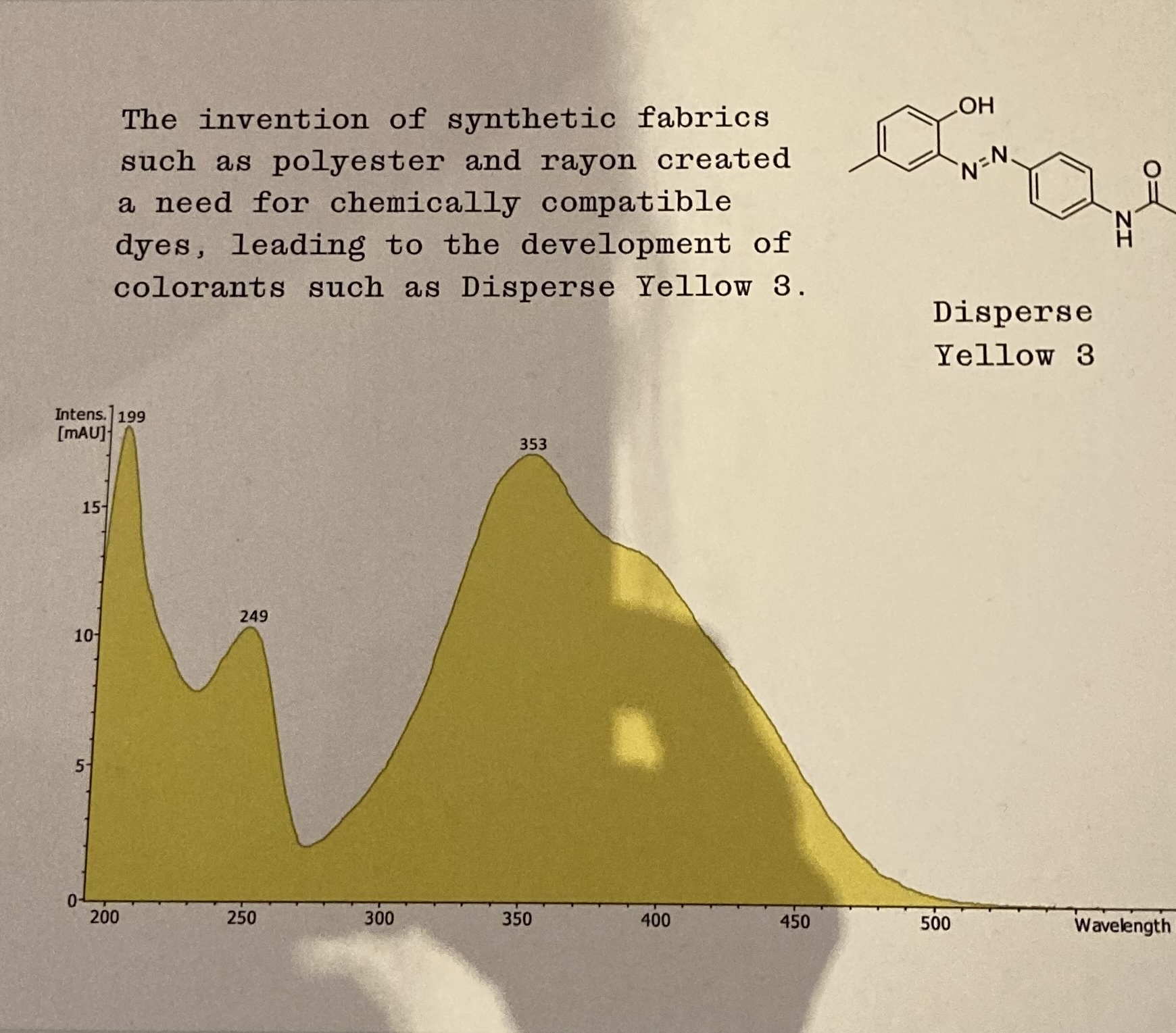
The first plant to return was the nonnative Honeysuckle, L Japonica. Lovely if invasive (though beggars can’t be choosers) and for a year or two, the predominant source of color, a pale to the point of insipid Venetian yellow, in our design. But then one day, overnight it seemed, our chromatic choices exploded, as well as our store of textures and smells: suddenly we had Joe-Pye weed with its flat frayed heads of purple madder; common milkweed with its bold pom poms of indole-scented flowers, pink tinged with antica green, botanically classed as Asclepias syrica as opposed to Asclepias incarnate, or swamp milkweed, which is also viable once more in the new wetland beyond the creek and right now teaming with cadmium orange and antimony-yellow-winged monarch butterflies; wild bergamot, its shaggy violet blooms bobbing beneath the weight of bumblebees; sharp-scented (like a mix of lemon and turpentine) saffron and vermillion red sneezeweed; ultramarine belled spires of lobelia. Not to mention our rich variety of native grasses and groundcovers, including big and little bluestem, wild ginger, Appalachian barren strawberry, bearberry and broadleaf sedge, which not only bring additional blossoms and seed heads, but also gorgeous shades and depths of green in the summer, from light suffused lime to almost black, and fiery bursts of crimson, copper and gold in the fall. And most exciting of all this new plant, which looks like a tiny daisy but has no name that we know of and grows close to the ground so that it can only be seen from above, a color that you have never seen before in this context but might recognize from that slinky yellow polyester dress you used to wear in high school to show off your tan, a dress that everyone except your mother used to say made you look radioactively hot.
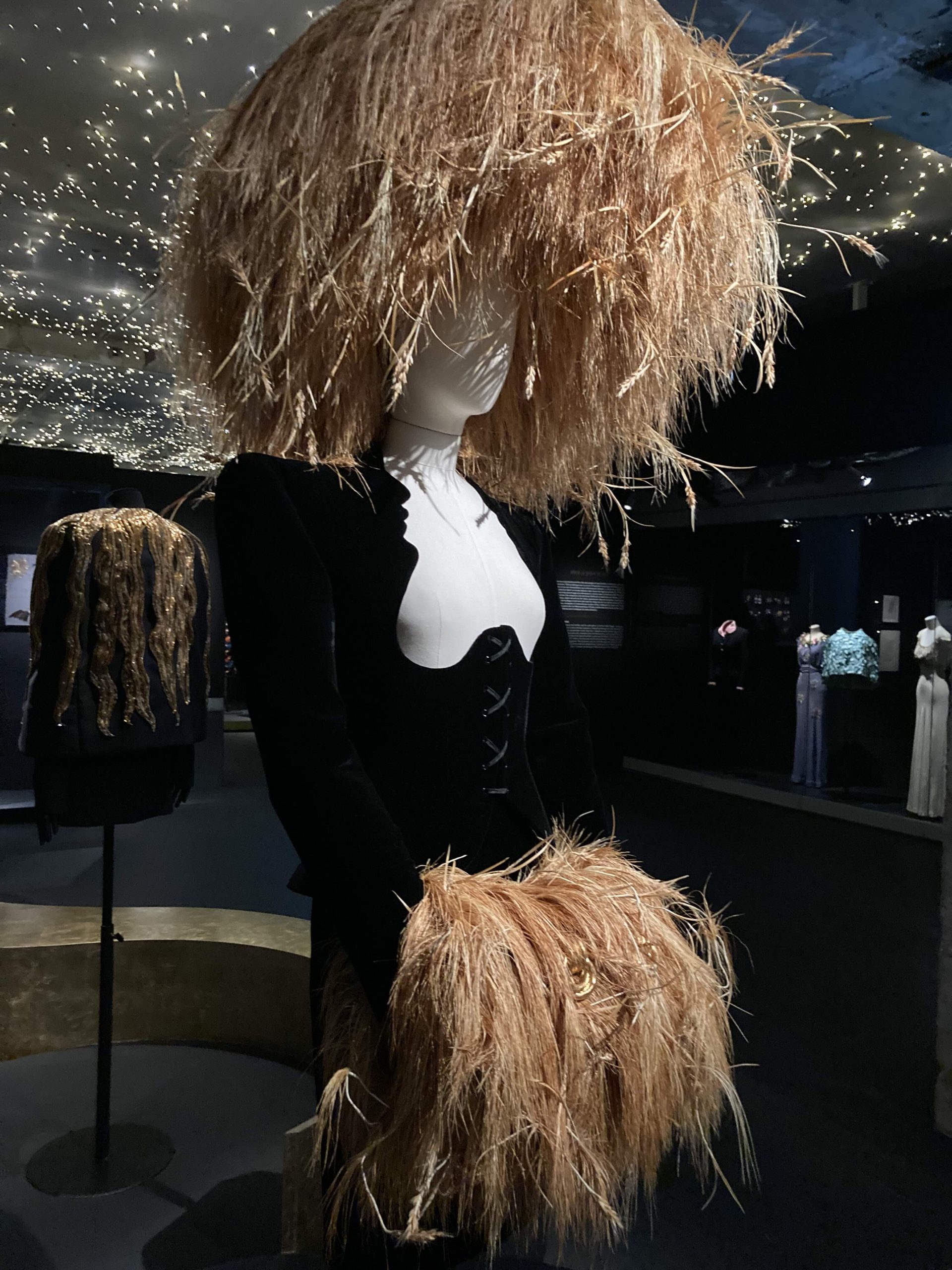
Welcome to Cate’s Upstate (which, by the way, is no longer Cate’s Upstate because no one needs names anymore, least of all you), and check out the shifting, lifting, bobbing, throbbing, thrumming, soughing mosaic of plant, bird, and insect life that has replaced your boring lawn. Do feel free to zero in, to examine, for instance, this paper towel-sized patch of ground, which is actually a scrap of a flannel shirt, stamped into the soil, the barely discernible and anyway always already muted plaid beginning to bloom with tiny, impossibly bright yellow flowers mixed with shoots of bluestem. You might think it is derivative of Elsa Schiaparelli’s wheatgrass hat, but where do you think she got her inspiration?
About the Author
 Elisabeth Sheffield is the author of five novels, Sex and Character (recently completed), Ire Land: A Faery Tale (Spuyten Duyvil, 2021), Helen Keller Really Lived (FC2 2014), Fort Da: A Report (FC2 2009), and Gone (FC2 2003). A National Endowment of the Arts Award for Literature Fellow in 2012, she has also been awarded two Fulbrights, in Kiel, Germany (1999-2000), and in Belfast, Northern Ireland (2014), and a writing residency at the Hanse Institute for Advanced Study in Bremen, Germany (2016-2017). She lives in upstate New York and Boulder CO, where she teaches in the creative writing program at the University of Colorado.
Prose
Leeuwenhoek’s Lens
Eric Williams
Cate’s Upstate or Fashion After the Apocalypse
Elisabeth Sheffield
from Cityscape with Sybarites
Israel Bonilla
The End of My Sentence
Roberto Ontiveros
Storing Dinosaurs
Dan Weaver
Winners
Julia Meinwald
Tiered Rejections
Stephen Cicirelli
Brother from Another
Jaryd Porter
The Robinson-Barber Thesis
Joyce Meggett
Point of Comparison
Of the Lovers
Addison Zeller
Another Place
Addy Evenson
Poetry
Let’s Sit on the Bench and Chat
Tatyana Bek, translated by Bita Takrimi
Blueberries
Edward Manzi
Crow calls from the top of a pine.
Crow dreams an eerie peacefulness laced with fear
Peter Grandbois
past is a flame
Karen Earle
Cover Art
Ocean Beach I
Judith Skillman