
Essay
Burning Down the House: Reconsidering Fahrenheit 451’s importance
by T.S. Carney
The novel Fahrenheit 451 has had a long-lasting impact in the realm of dystopian fiction. The celebrated Ray Bradbury story has readers go through the turmoil of a regime where reading “novels involving conflict” are suppressed, free thought is abolished, and technology takes over allowing people to be comfortable over thoughtful. Guy Montag, our protagonist, is an officer of the law who sees the horrors and injustices, transforms, and leaves the regime to walk around reciting he book he learned from the “book people.”
And, as with any reader who loves Ray Bradbury, they are filled with expressive, vivid sentences such as the very beginning three sentences:
“It was a pleasure to burn. It was a special pleasure to see things eaten, to see things blackened and changed. With the brass nozzle in his fists, with this great python spitting its venomous kerosene upon the world, the blood pounded in his head, and his hands were the hands of some amazing conductor playing all the symphonies of blazing and burning to bring down the tatters and charcoal ruins of history.” (Fahrenheit 451, 1)
A group of sentences that every bibliophile, logophile, lexophile, and even pyromaniac would be titillated over, one that brings that reader’s sensibilities to the forefront.
But…is it really that good, or have modern audiences simply just followed the trend apologizing for it because it’s a classic?
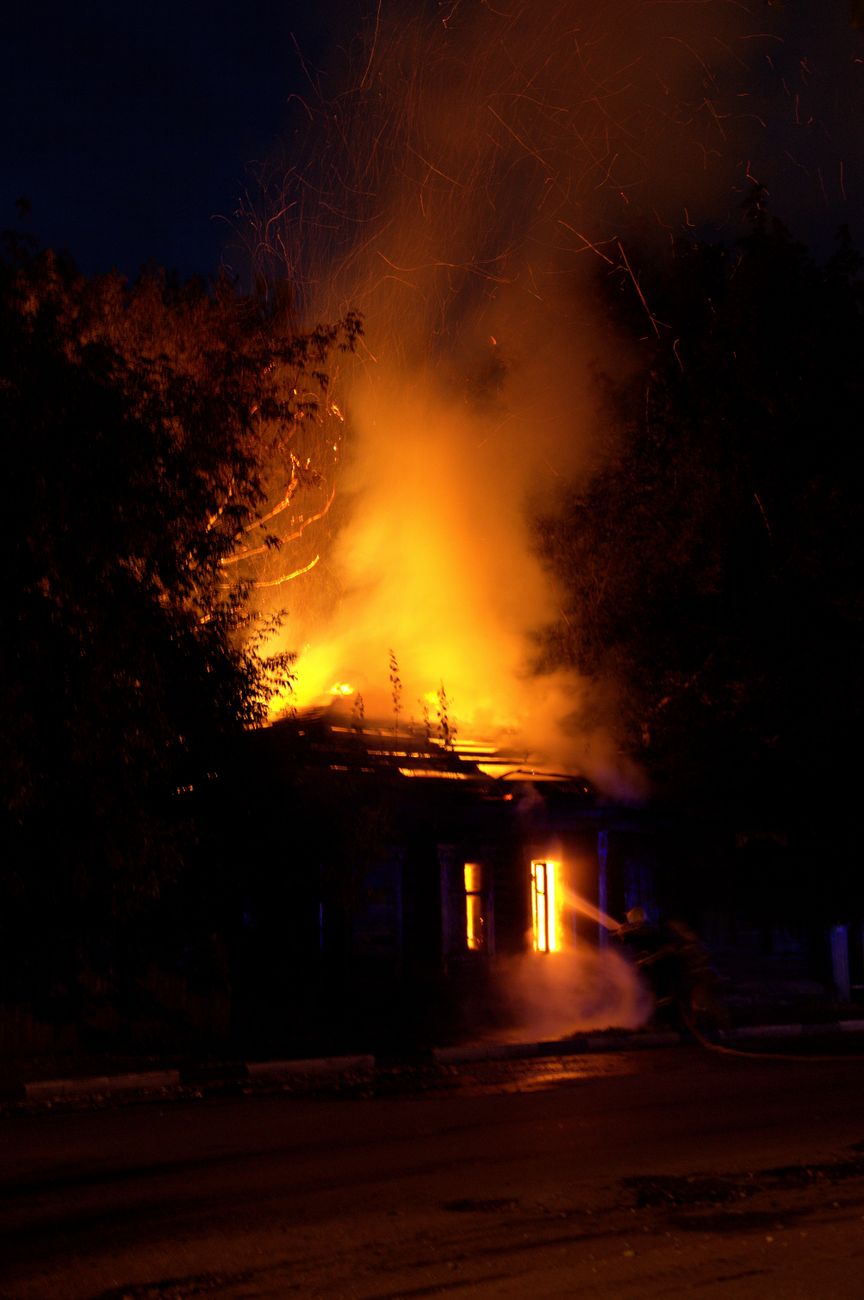
I think it’s time to finally put this book to the fire, both literally and literary, and examine Fahrenheit 451.
Before we become a literary Guy Montag, let’s first discuss the positives—in my satirical work I would pause—but I’m going to give it a fair and honest approach.
First positive: if you like flowery words, long picturesque sentences, and character arcs then this is the book for you.
Second positive: the book is allegorical, which gives it a bit of freedom to identify its message: the technology is making people stupider, and we need to preserve books that make us think.
Third positive: It’s a dystopian-lite, which lets you travel the course of this dystopian world, but not be bogged down on the system—like a 1984, Brave New World, and We.
Fourth: an argument could be made that he predicted modern television today.
Aside from those, the book definitely does not stand up on its own, and it’s the very positives that I so described are the reasons.
First, sure the book has flowery language which allows a person to show off their perspicacity, but that language hurts the novel. Unlike what some may think, the book is not deep; in fact, it’s very silly, and the inclusion of the language of fire spouting out in their pseudo-sexual way, exemplifying a man firing his projectile of kerosene laden devices on top of books reads like something you need in a backroom, or late at night when your partner is asleep. Yet, it’s framed in such a way that it gets passed, sneakily, in a way that children’s cartoons snuck in adult material over the heads of children, but fully aware adults. Take away the Bradbury language and you got nothing.
Next the plot, My goodness! Guy Montag burns some books, walks home, finds a girl standing on the street, the girl on the street opens his mind, and then we go through his rebellion against the system. Winston Smith was at least dissatisfied with Oceania and Big Brother (and naively went to his downfall). John Savage was horrified by the mechanical and uncaring nature of the Brave New World he was brought from. Even D-503 had inner conflict between his emotions and his rationality forcing himself to get a lobotomy. Guy Montag simply just decides “Yes, random stranger, that’s right! I hate my television, my job, and now I like classic books!” Pretty silly. Pretty quick reaction
And this leads to the third point that this novel is an allegory which allows it certain liberties in ignoring certain systems. What’s fascinating about this argument is that the misunderstanding, or lie, that readers are told about this novel are that “all books are burned” in the most reductionist argument possible, and this is so far from the truth.
Citizens in this dystopian world are literate, are able to read technical books and fast quick novels, yet choose to not read classic novels out of boredom and convenience, and in order to not be like this world, we must read good books (like mine).
And because that is the message of the novel, we can ignore the system that surrounds it. Citizens can secretly hide the verboten books and read them. The authoritarian regime has no power, yet people just go along with it. You can watch television, but are unable to dramatize a book.
It’s pages and pages of this could be our future almost like we got the “Bad Ending” from “Chrono Trigger” where it says “In the End, The Future Refused to Change.” It is absolutely silly, and if you view it from that perspective, you can see it.
And if the counter-argument still is “This novel is an allegory,” then we only have to look at Plato’s “Allegory of the Cave” where the “society” tells the inhabitants how to think, and the escape of the one inhabitant going into the real world, and seeing the truth, is far different than this. Plato does it effectively: “society says this, truth is this.” Fahrenheittries so hard and fails.
Lastly, the claim that Fahrenheit 451 predicted modern television culture. Another laughable argument. And Nostradamus predicted 9/11 (“Two steel birds will fall from the sky on the Metropolis / The sky will burn at forty-five degrees latitude / Fire approaches the great new city / Immediately a huge, scattered flame leaps up / Within months, rivers will flow with blood / The undead will roam the earth for little time.”)! There was trash television then, just like there is trash television now! And to call him a prophet on this matter is really giving him more credit than should be deserved.
In conclusion, Fahrenheit 451 claims to be a lineage of “dystopian novels” but falls flat on its face. It is neither rational, nor prophetic, nor intelligent, but simply a nice, safe, book with beautiful prose that segues into a message, somehow.
High school and college students: this is the essay you need.
About the Author
T.S. Carney is a special education teacher. His work has appeared or is forthcoming in The Good Men Project, Your Impossible Voice, Eunoia Review, Neon Origami, Discretionary Love, The Gotham Guillotine, Maudlin House, Soul Poetry, Prose & Arts, Once Upon a Crocodile, FLARE, Robot Butt, miniMAG, Philosophy Now (Issue 175), Philosophy and Literature (10/2027l, The Educator’s Workroom, Mr. Beller’s Neighborhood, Bridge Eight, Orichalcum Tower Press, Lunar Nethar, Triptych, Eccentricities Magazine and elsewhere.


