Essay
Big Brother Says “2+2=Fun”
by T.S. Carney
I was listening to NPR, a favorite pastime of my family (including my nearly two-year-old son). At seven o’clock in our region, we hear the show 1A—a program that tackles the issues of the day, earnestly and without irony.
Today’s topic was “George Orwell’s 1984 and the Threat to Our Democracy.”
Seems pretty boring, cliché, and trite.
But the commentators spoke in trembling tones about how society is “moving toward totalitarianism by the second,” invoking Orwell’s “lasting warning.”
It was in that moment that I thought maybe it’s time to take a big dump on 1984 — not out of contrarianism, but because the fear is misplaced.
If anything, Big Brother should be less terrifying and more embarrassing.
Let’s get the basics out of the way.
1984 was heavily inspired by We by Yevgeny Zamyatin—a Soviet author who wrote his dystopia in 1920–1921, decades before Orwell. Zamyatin’s “One State” was based on a society obsessed with Science and Reason. Everyone had a number instead of a name (the main character is D-503). He’s a mathematician building a giant spaceship called The Integral to export scientific perfection across the universe.
Then he meets I-330—a woman who smokes, drinks, and introduces him to emotions. Through her, D-503 experiences rebellion, chaos, and love. It’s an extraordinary book—the kind that actually earned its paranoia.
Why mention this?
Because Orwell copied it.
D-503 becomes Winston.
I-330 becomes Julia.
The One State becomes Big Brother.
The Benefactors become the secret police.
Glass houses become telescreens.
Even the endings are near duplicates: Zamyatin’s hero is lobotomized, Orwell’s broken.
The difference?
Zamyatin lived under totalitarianism. Orwell read about it from a distance and turned it into moral theater for English readers.
And that’s why 1984 feels so clumsy.
It isn’t a realistic fear—it’s a bad thought experiment that doesn’t even obey its own rules.
Let’s start with Winston.
Unlike D-503, who spends most of We trying to rationalize feelings through math and logic, Winston jumps into love like a repressed frat boy. The whole premise of 1984 collapses once you realize these two characters somehow manage a secret romance in a city under constant surveillance.
How did they even meet?
How can you “turn off” the telescreen in a state that invented it?
And how is Winston reading Goldstein’s Theory and Practice of Oligarchical Collectivism—a book that predates Newspeak, the very language meant to erase complex thought?
Nothing adds up.
Orwell’s dystopia is built like a bad stage set: impressive from the audience, hollow from the side.
And yet people still worship 1984 like gospel.
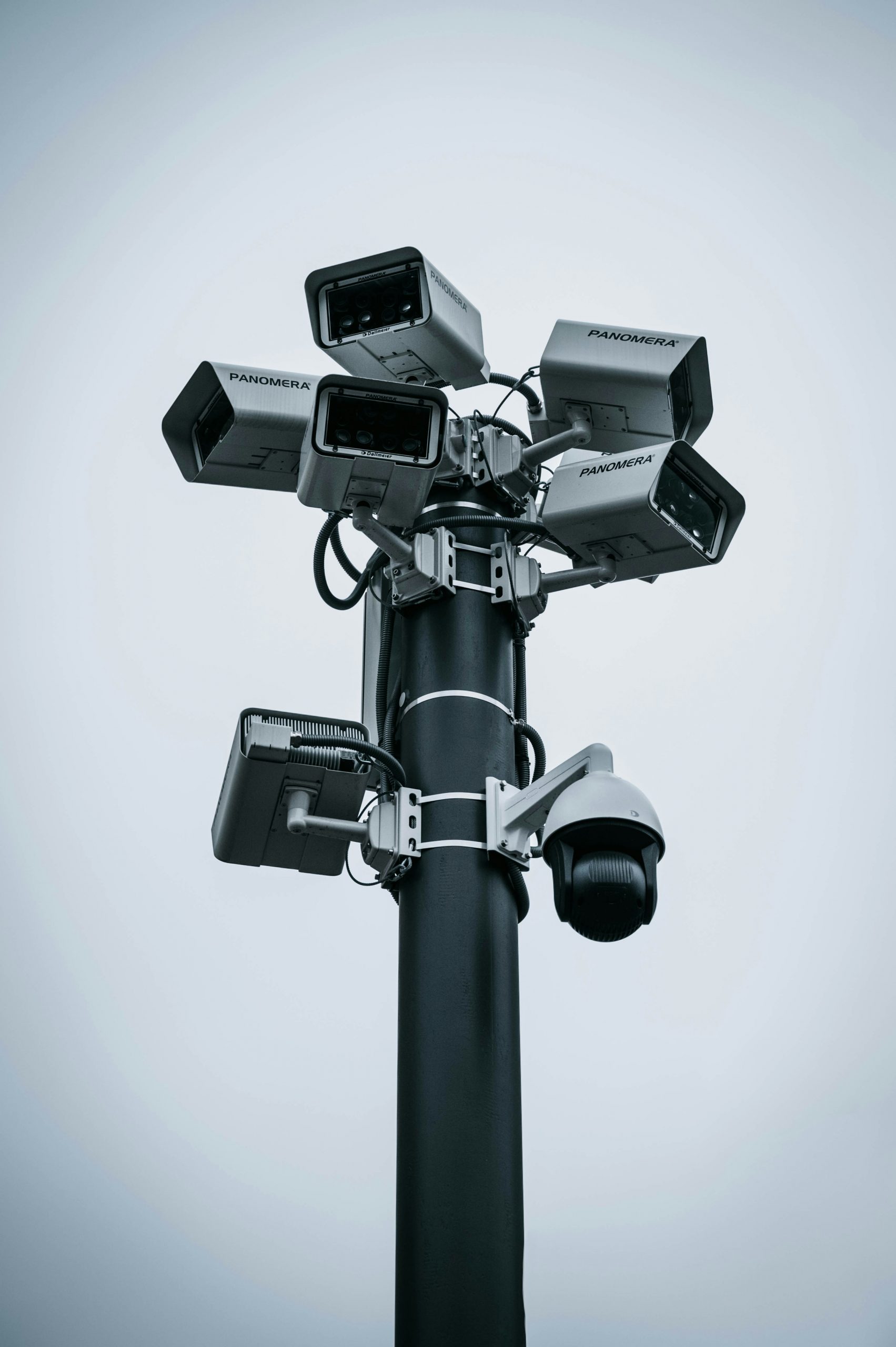
They use it as shorthand for every modern anxiety—tech, politics, social media, Trump, take your pick. They perform resistance by quoting Orwell, while livestreaming their outrage on platforms that literally track their faces.
They fear surveillance but post daily on TikTok.
They distrust the state but obey their smartwatch.
They rant about privacy during Zoom meetings.
Big Brother doesn’t need to watch you.
You send him push notifications.
So maybe Orwell wasn’t prophetic—maybe he just underestimated how willingly we’d cooperate.
Without Trump, NPR has to invent new villains, so they dust off Orwell every six months and remind listeners that “democracy is under threat.”
But maybe democracy isn’t under threat.
Maybe it’s just bored.
Because if Big Brother existed today, he wouldn’t be torturing dissenters in the Ministry of Love.
He’d be moderating a virtual staff meeting—with his camera off.
About the Author
T.S. Carney is a writer and Special Education teacher whose work has appeared in Your Impossible Voice, Maudlin House (soon-to-be two-time contributor), and The Good Men Project (five-time contributor), and Neon Origami. His work, which explores the intersections of disability, cultural observation, and the “quiet calibration” of systems, is forthcoming in The Eunoia Review and The Teacher’s Workroom. He believes the modern Big Brother is less a dictator and more a bored middle-manager with a weak Wi-Fi connection.